Whooo Loves Winter?
For many people, February is known as the month of love, thanks to Valentine’s Day and heart-shaped everything. But romance isn’t just for humans, several owl species that call Iowa home are also beginning one of the most important seasons of their year.Jacklyn Wolken, Conservation Technician
Iowa has nine different owl species: some live here all year, some only in specific parts of the state, and some only appear in certain years depending on weather patterns. Three of those species are common throughout the state, including Des Moines County, and these are the owls you’re most likely to hear calling during the winter and early spring.
The earliest nester in Iowa is the Great Horned Owl. These owls begin scouting for mates and nesting sites in early winter. Their deep, classic hooting calls are often heard on cold winter nights as they communicate with one another and defend territory. Great Horned Owls typically use old nests built by large birds such as hawks or eagles, though they have also been known to nest on cliff ledges. Before laying eggs, they line the nest with feathers, fur, leaves, or pellets. By late January most Great Horned Owls have laid two to four eggs.
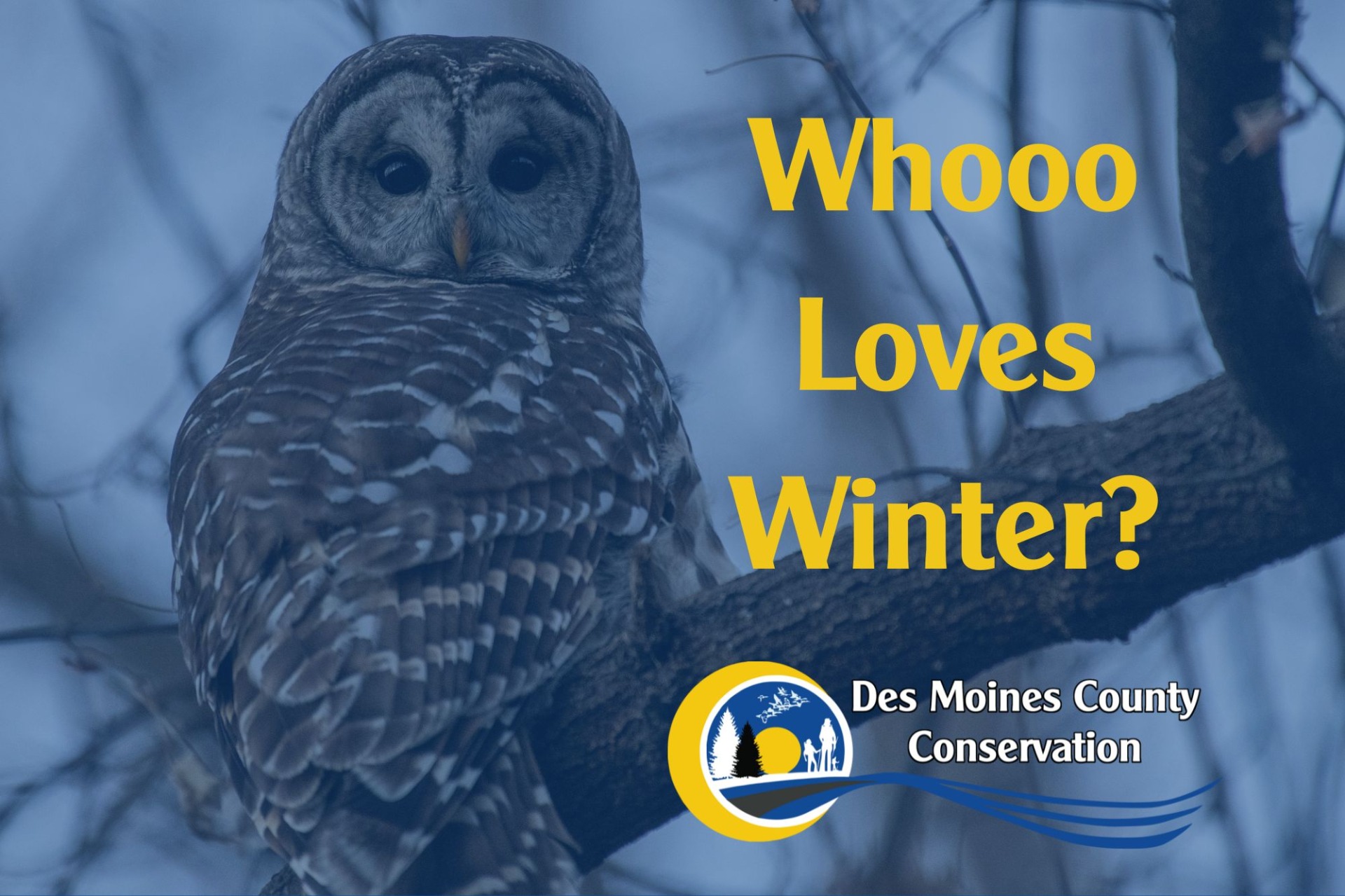
Barred Owls are Iowa’s second-earliest nesting owl. February is peak calling season for this species, making it a great time to listen for their well-known “Who cooks for you? Who cooks for you all?” call. Barred Owls commonly use old squirrel or crow nests and readily take advantage of nesting boxes in mature forests near water. They add very little material to their nests, sometimes just a bit of lichen or feathers. By early to mid-March, they typically lay two to four eggs.
Eastern Screech Owls are small, secretive, and common throughout the county, especially in wooded neighborhoods. Their eerie call is often compared to the whinny of a horse. These owls frequently nest in old woodpecker holes or nesting boxes, including wood duck boxes, and they do not add any extra nesting material. Eastern Screech Owls are later nesters, usually laying two to six eggs beginning in April.
If you’re interested in learning more about these fascinating birds, consider joining a free Owl Prowl program this month. Led by Des Moines County Conservation naturalists, each program runs from 7:00-8:30 PM and begins with a short presentation on owls and is followed by a roughly two-mile nighttime hike. Along the way, recorded owl calls are played in hopes that a wild owl will respond. These hikes are often cold, but they’re a truly unique experience that encourages participants to rely on senses other than sight. Lights are not used during the hike, as they can scare the owls away.
Three Owl Prowls are scheduled for this year. The first, on February 12, is part of the Ladies Adventure Group and is open to women ages 18 and up. The remaining programs on February 19 and February 26 are open to all ages, though children must be accompanied by an adult, as quiet listening is required. Locations are shared only with registered participants to keep group sizes small.
To register, visit Des Moines County Conservation’s RecDesk or call Starr’s Cave Nature Center at 319-753-5808. These programs fill quickly, so don’t wait to claim your spot!
February may be cold, but it’s full of love. Whether you join an Owl Prowl or head out on your own nighttime walk, challenge yourself to slow down, listen closely, and see if you can hear an owl calling in the winter night.
published Monday, February 9, 2026